
The Sony α7 V has arrived as one of the most versatile full-frame cameras we’ve stocked in years. Here’s our honest assessment of what works, what doesn’t, and who should actually buy this camera.
Who Is This Camera Really For?
The α7 V sits in an interesting position. It’s not Sony’s highest resolution camera (that’s the α7R V with 61 megapixels), nor is it their fastest flagship (the α1 still holds that crown). Instead, it’s Sony’s best attempt at creating a single camera that excels at both professional photography and video work without significant compromises in either discipline.
We expect three types of customers will gravitate toward this camera:
Wedding and event photographers who need reliable autofocus, enough resolution for album prints, and the ability to shoot video highlights without carrying a second body. The 33-megapixel resolution provides plenty of detail for typical wedding deliverables, whilst the 30fps burst mode means you won’t miss critical moments during the ceremony.
Content creators and hybrid shooters who split their time between stills and video. If you’re shooting commercial work one day and filming interviews or social content the next, the α7 V eliminates the need to own separate photo and video bodies.
Enthusiast photographers upgrading from older Sony models (particularly α7 III or α7 IV owners) who want access to Sony’s latest AI autofocus technology and improved video specs without paying flagship prices.
What Actually Matters: Real-World Performance
The Autofocus Is Genuinely Impressive
Sony’s AI-based subject recognition has improved considerably. The human pose estimation technology represents a significant step forward—the camera doesn’t just detect eyes anymore, it understands body positioning and predicts movement. When photographing a bride walking down the aisle, the camera should maintain focus even when she momentarily looks down or turns her head. For wildlife work, the improved bird recognition (Sony claims 50% better than the α7 IV) should mean fewer lost shots when birds turn or are partially obscured by branches.
The 759 phase-detection points covering 94% of the frame ensure accurate focus even with off-centre compositions. The new XS spot focus size is particularly useful when shooting through foreground elements—something that frustrated many α7 IV users.
30fps Makes a Difference (But With Caveats)
The electronic shutter’s 30fps continuous shooting with full AF/AE tracking is legitimately useful for action work. The blackout-free experience helps photographers track fast-moving subjects more effectively than cameras with viewfinder blackout.
However, it’s worth noting this speed is only available with the electronic shutter. Rolling shutter artifacts can appear with very fast movement or rapid panning. For most real-world photography—including sports, wildlife, and events—this shouldn’t be problematic, but it’s something to be aware of if you’re shooting motorsports or other extremely fast action.
The mechanical shutter tops out at 10fps, which remains perfectly adequate for the majority of professional work.
Video Capabilities That Compete With Dedicated Cinema Cameras
The internal 4K 120p recording is where the α7 V really distinguishes itself from the α7 IV. You no longer need an external recorder for high frame rate work, which simplifies your kit and reduces setup time on location.
The 7K oversampled 4K 60p footage should show noticeably improved detail compared to line-skipped 4K. The oversampling process captures 3.3 times more information than required for the final 4K file, which typically results in sharper footage with reduced moiré.
Dynamic Active Mode stabilisation should produce remarkably smooth handheld footage. It’s not quite gimbal-smooth, but for run-and-gun documentary work or event coverage, it should eliminate the need to carry additional stabilisation equipment in many situations.
The approximately 90-minute continuous recording time (4K 60p 8-bit) is adequate for most professional work—hour-long corporate presentations and lengthy interviews should be comfortably achievable without overheating issues, representing a substantial improvement over many previous Sony bodies.
Image Quality: Excellent But Not Exceptional
The 33-megapixel sensor should produce excellent image quality with impressive dynamic range (Sony claims 16 stops). Files should have plenty of latitude for shadow recovery and highlight preservation in post-production. Wedding photographers should be able to successfully rescue details in bright windows and dark shadow areas that would have been lost with lesser cameras.
However, if your work requires maximum resolution—large format printing, heavy cropping, or commercial clients with specific megapixel requirements—the α7R V’s 61 megapixels remains the better choice. The α7 V’s resolution is more than adequate for typical professional needs (prints up to A2, web use, standard editorial work), but it’s not a high-resolution specialist.
Low light performance should be strong throughout the native ISO 100-51200 range. Based on Sony’s sensor technology trajectory, we expect clean, usable files at ISO 6400, and acceptable results at ISO 12800 for most applications. The expanded ISO range up to 204800 exists primarily for emergency situations—image quality typically degrades significantly at these extreme settings.
Build Quality and Ergonomics
The magnesium alloy construction should feel reassuringly solid. Weather sealing should prove effective in typical UK weather conditions, though we wouldn’t recommend prolonged exposure to heavy rain without additional protection.
The 4-axis multi-angle monitor is genuinely useful. Unlike traditional flip-out screens that become awkward when shooting in portrait orientation, this design maintains functionality regardless of how you’re holding the camera. The touch sensitivity should be responsive and accurate for focus point selection and menu navigation.
The grip appears well-designed and should remain comfortable even during extended shooting sessions with heavier lenses, including 70-200mm f/2.8 lenses at all-day events.
Battery life is adequate but not exceptional. The CIPA-rated 630 shots (viewfinder) translates to roughly a half-day of professional shooting in real-world use. Wedding photographers and event shooters should plan on carrying 3-4 batteries for a full day’s work. The dual USB-C ports with Power Delivery support do enable continuous power supply from USB-C power banks, which effectively eliminates battery concerns for studio work.
Connectivity: Finally Keeping Up With Modern Workflows
The dual USB-C ports represent a significant improvement. Port 1’s SuperSpeed USB 10Gbps should enable substantially faster file transfers than previous models—roughly 3-4x faster speeds when backing up large shoots.
The ability to simultaneously transfer files and supply power addresses one of the most common workflow complaints about previous Sony bodies. In studio environments, you can remain tethered to a computer whilst keeping the camera powered indefinitely.
Wi-Fi 6E with 5GHz and 6GHz support should deliver noticeably improved wireless transfer speeds. Sports photographers and photojournalists who need to deliver files immediately will appreciate the faster FTP transfers, though we still recommend wired connections when absolute reliability is critical.
What Could Be Better
No built-in flash or popup flash. This isn’t unique to the α7 V, but it’s worth noting for photographers who occasionally need emergency fill light.
Menu system remains complex. Sony has improved menu organization over the years, but it’s still not as intuitive as some competitors. New Sony users should expect a learning curve.
CFexpress Type A cards are expensive. Whilst you can use standard SD cards for most shooting scenarios, the highest bitrate video formats and maximum buffer performance require CFexpress Type A cards, which cost considerably more than SD cards of equivalent capacity.
Rolling shutter with electronic shutter. Whilst not problematic for most work, it’s more pronounced than the mechanical shutter and can cause issues with very fast movement.
How It Compares to Key Competitors
Versus Sony α7 IV: The α7 V justifies its premium through faster continuous shooting (30fps vs 10fps), 4K 120p internal recording (vs 4K 60p), significantly improved autofocus, and better connectivity. If you primarily shoot action, wildlife, or video content, the upgrade makes sense. For slower-paced photography, the α7 IV remains excellent value.
Versus Sony α7R V: Choose the α7R V if you need maximum resolution (61MP) for large prints, extensive cropping, or clients with specific megapixel requirements. Choose the α7 V if you value continuous shooting speed, video capabilities, and don’t require the absolute highest resolution.
Versus Canon EOS R6 Mark II: The Canon offers similar resolution (24MP), slightly better battery life, and arguably more intuitive ergonomics and menus. The Sony counters with higher resolution (33MP vs 24MP), faster continuous shooting (30fps vs 40fps electronic, but Sony’s buffer should be deeper), and more comprehensive video features. Lens ecosystem and existing kit will likely drive the decision more than camera body differences.
Versus Nikon Z6 III: The Nikon offers comparable hybrid performance with a partially-stacked sensor and strong video features. The choice often comes down to lens ecosystem preferences and ergonomic familiarity rather than clear performance advantages either way.
The Verdict: Who Should Buy This Camera?
The Sony α7 V excels as a true hybrid camera for professionals who need excellent stills and video capabilities in a single body. It represents the sweet spot in Sony’s lineup—professional features and performance without flagship pricing or the specialisation of the high-resolution α7R series.
Buy the α7 V if you:
- Shoot both stills and video professionally and want one body that handles both well
- Need reliable subject tracking for weddings, events, wildlife, or sports
- Want 4K 120p recording without external recorders
- Already own Sony FE lenses and want to upgrade from older α7 models
- Value versatility over specialisation
Consider alternatives if you:
- Primarily shoot static subjects and need maximum resolution (α7R V)
- Rarely shoot video and don’t need 30fps bursts (α7 IV offers better value)
- Require the absolute fastest performance regardless of price (α1)
- Are heavily invested in Canon or Nikon ecosystems (cross-brand switching costs are significant)
Based on Sony’s specifications and the trajectory of their recent releases, we’re confident the α7 V will prove to be one of the best hybrid full-frame cameras currently available. It successfully delivers on its promise of professional-grade versatility without significant compromises in either stills or video performance.
For photographers and videographers who genuinely need both capabilities at a high level, the α7 V represents excellent value in Sony’s lineup.
Buy The Sony A7 V
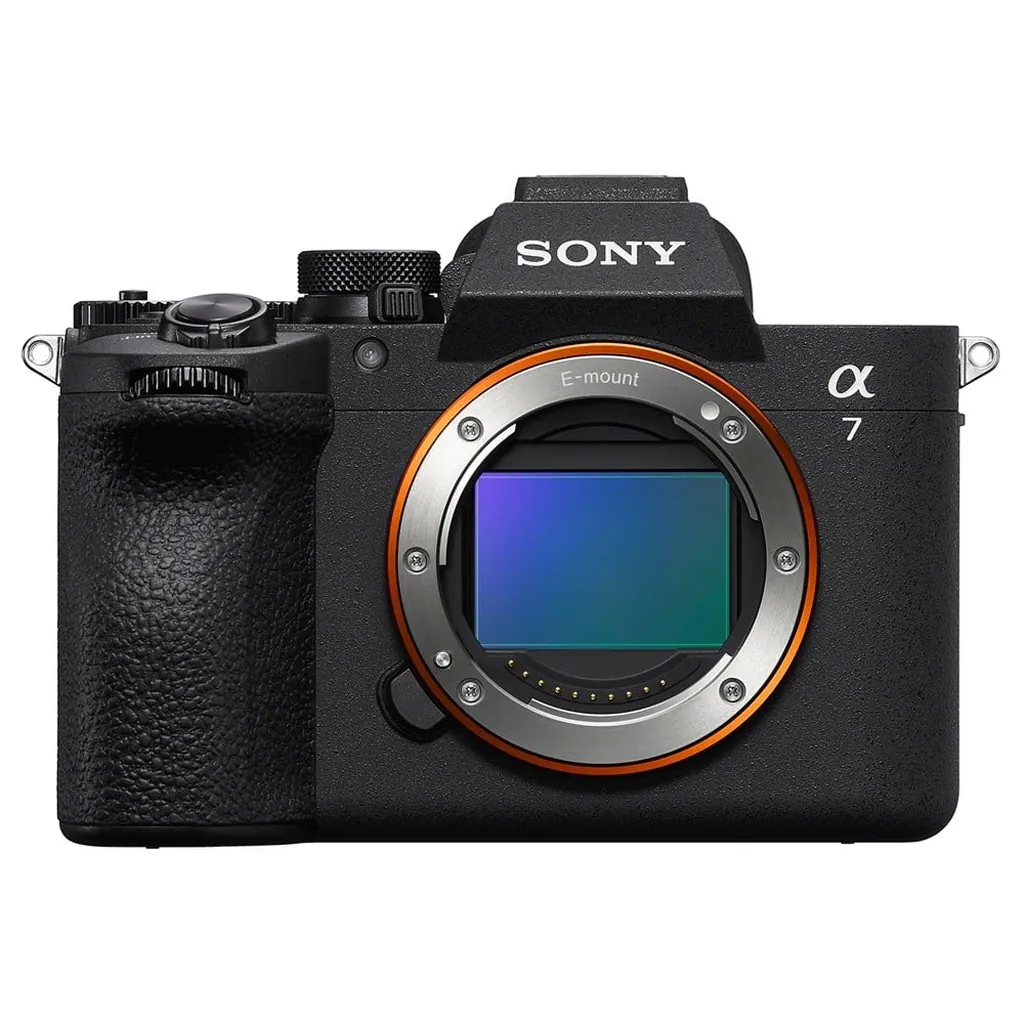
Ready to add the Sony α7 V to your kit? Order yours from Campkins Cameras today and get expert advice from our Cambridge-based team who understand the real-world demands of professional photography.